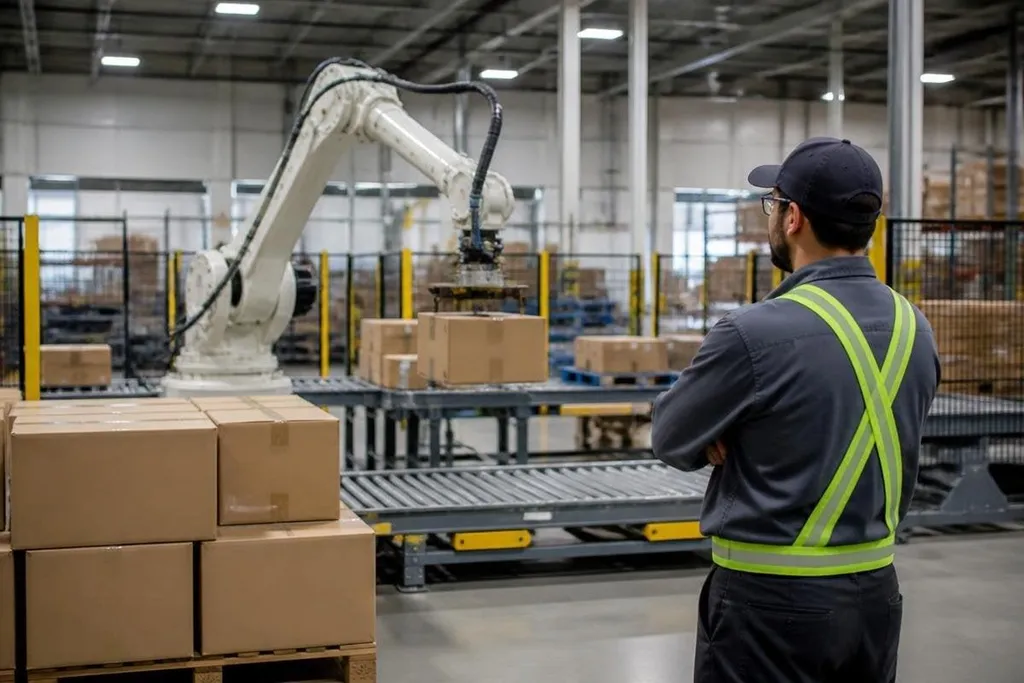
A robot can remove a lifting task in one shift, but the people around it still carry the cost of the change. The hard part is often the work that moves elsewhere: monitoring, fixing errors, meeting faster targets, or finding a new job.
This matters to an operations manager deciding whether a robot will improve a site or shift its problems onto staff.
- Robot speed can raise the pace for people nearby.
- Job loss is one cost; training, stress, and lost hours are others.
- A safer plan measures worker outcomes before the machines arrive.
What automation changes first
Most robot projects start with a task, not a whole job. A mobile robot may carry bins across a warehouse. A robotic arm may load a machine. Software may send work to the next station without a person choosing the order.
That change can remove heavy lifting, awkward reaches, or repeated motion. It can also leave workers with the tasks that robots handle poorly: clearing jams, checking damaged goods, and making quick decisions when the normal process fails.
The work may become less physical but more watchful. A worker who once handled one station might now watch several machines and step in when a sensor, gripper, or network link fails. The new role can demand more training without bringing higher pay.
Speed creates another pressure. If a robot cuts the time needed for one task, managers may raise the expected output for the whole shift. A person can then face a faster pace, shorter breaks, or more time spent standing near moving equipment.
Job loss is only one measure
Headcount gets the attention because it is easy to count. The wider cost sits in the months around a rollout, when shifts change, skills become less useful, and workers decide if they can stay.
A site may keep the same number of people and still make work harder. New software can add screen time. Remote monitoring can make a worker responsible for failures across a larger area. A maintenance role can also bring night work, callouts, or exposure to equipment that staff have not been trained to repair.
The cost can reach outside the site. If a local employer removes entry-level roles, younger workers lose a common way to gain experience. If a site closes one shift, nearby shops, transport services, and families feel the change too.
Those effects need evidence from named sites and dated results, not a demo alone. Robot automation reporting can connect an automation claim to the jobs affected and the duties left for staff after installation. The next section looks at whether added safety can still leave workers with less skill and control.
Safety and skill can move in opposite directions
A robot cell can keep people away from a dangerous tool. That benefit depends on the fence, light curtain, emergency stop, software limits, and training working together every day.
New risks appear when staff must enter the cell to clear a fault or restart a process. A worker may know the production goal well but lack the training needed to judge stored energy, safe access, or a failed sensor.
Skills can also narrow. If a robot performs the main task, people may lose practice with the process that helps them spot a bad result. When the system fails, the site may have fewer workers who understand what the machine should do by hand.
The numbers a rollout should track
A responsible plan measures people as carefully as it measures robot uptime. Check these figures before installation, then review them after one month, three months, and six months:
- Hours of training per worker, including paid time away from normal duties.
- Overtime, sick leave, staff turnover, and missed breaks by shift.
- Fault-clearance time and the number of times workers enter a robot cell.
- Pay, job grades, and new skills attached to the roles that remain.
- Injuries, near misses, and reports of unsafe work pressure.
These figures won't explain every cause on their own. They give you a starting record, which is far better than calling a rollout successful because the robot met its cycle time.
A practical decision guide
Before signing off on a fast automation project, ask:
- Which tasks will disappear, and which new tasks will appear?
- Who gets paid training, and how many hours does it cover?
- Can the current staff move into the new roles?
- What happens when the robot fails during a busy shift?
- Who can stop the line without losing pay or facing discipline?
- Which worker figures will make you pause or change the plan?
I'd reject any plan that counts robot output but leaves worker training and job quality unmeasured.
Automation can reduce strain and remove dangerous work, but those gains need a place in the budget beside hardware, software, and maintenance. The next useful question for every rollout is plain: after the robot arrives, who has learned something new, who has lost hours, and who can still afford to stay?